Caryn Sullivan: Choosing “Pulling Together” Makes the Bitter Better

U70A7689

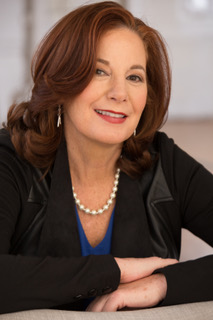
Caryn Sullivan is a storyteller.

In a world in which people need their stories told there is a need for people like Caryn Sullivan.

In a column she wrote for the St. Paul Pioneer Press in 2015 Caryn, who lost her husband suddenly to a heart attack, explained her reasons for being a storyteller:

“Everyone is grappling with something, be it addiction, mental illness, caregiving, autism, disease — fill in the blanks. While uncomfortable, sharing struggles and indulging vulnerability can foster kinship and understanding. Solidarity engenders strength.

I’m drawn to people who deal with challenges with tenacity and grace. I’ve woven many of their stories into my first book (just released), “Bitter or Better: Grappling With Life on the Op-Ed Page.” The stories remind us we are both students and teachers in life.”

Spare Key, www.sparekey.org an organization celebrating its 20th year of helping families with critically ill and seriously injured children in the hospital “Bounce and not Break” has been privileged to have Caryn tell our story.

In doing so she has helped raise our organization’s profile which, in turn, has permitted us to meet others to support our mission of providing housing grants to families with sick and injured children in the hospital.

This coming Saturday, June 10th, Caryn is helping another organization, Fraser, www.fraser.org

From its website, Fraser explains that it “..is Minnesota’s largest and most experienced provider of autism services. Fraser also provides services for mental health and other developmental disabilities for children and adults with special needs through healthcare, education and housing. Our programs are nationally recognized for their high quality, innovation, and individualized, family-centered approach.”

Caryn, unlike many of the organizations and people she writes about in sharing their stories, has a personal connection with Fraser.

As she writes on her fundraising page for the upcoming Pulling Together” event to raise funds for Fraser,

“My son’s autism diagnosis rocked my family’s world 23 years ago. He had what? 

Today the boy we called Jumpin’ Jack Flash lives in a bachelor pad with support from Fraser staff. He needs help with things most millennials can do without a thought – but he’s making strides. With his Fraser team leading the way he’s honing skills so he can live a life filled with purpose and joy.

Isn’t that what we want for all our kids?”

Caryn is right.

We all want our kids to live a life filled with purpose and joy.

Whether it is the children served by Fraser – or those served by Spare Key – the ultimate goal of any of us who are privileged to do the work we do is to help children – and their families – to live a life filled with purpose and joy.

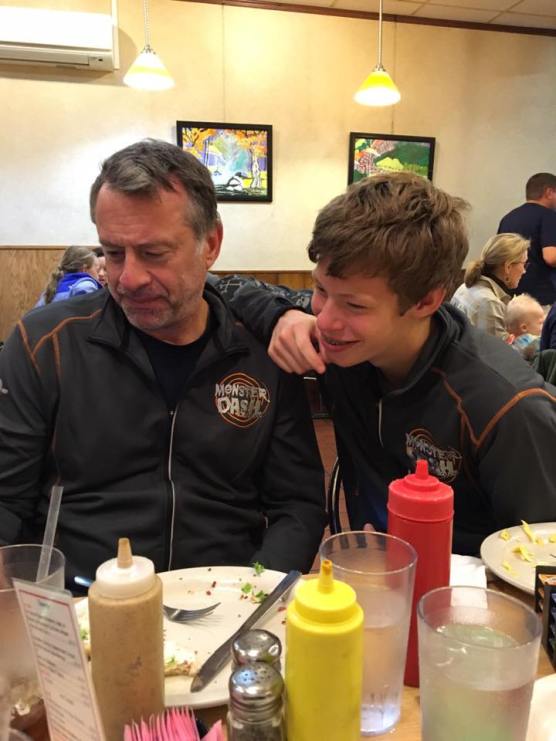
Jack Sullivan is the son of Caryn Sullivan.

He has autism.

He is also somebody we, at Spare Key, have had the privilege of getting to know on his weekly trips to our office to help us with work that we need to have done to help advance our mission.

He is just like anybody else’s son.

He could be my son.  He could be anybody’s son.

He just so happens to be Caryn Sullivan’s son.

I’ve gotten to know Caryn through my work at Spare Key.  I have also gotten to know her as she continues to find ways to share the journey of so many others who have found themselves confronted by life’s tragedies and challenges.

She is dauntless.  She is courageous.  She is committed.

It’s what one has to be to write the stories of others suffering and loss while not allowing your own to consume their narrative.

In writing her book,Bitter or Better Grappling with Life on the Op-Ed Page”, Caryn shares with readers her own personal journey of loss.  She also shares with them the stories of others who have found themselves confronted by nearly unimaginable challenges.

In doing so she doesn’t hide the pain, grief, agony or anguish of loss.

Nor does she shy away from having to confront the unknown of what it meant to have a son diagnosed with autism.

Being a storyteller is a remarkable gift.  Those who do it well honor those who are the subjects of their work.

Spare Key, and the nearly 3,300 families we have served, has been honored by Caryn’s sharing of our story and our journey.

For those of you looking to help tell the story of Fraser and the important work it does please helping Caryn’s efforts this Friday in “Pulling Together” to help children live with joy and purpose by joining her Team at: https://secure.qgiv.com/event/account/504080/

Pillows: When all else fails to heal the world.

_89816982_thinkstockphotos-530198632

Few memories of my childhood survive in my mind.  I am not sure exactly why.  There are, from time to time, flashbacks of things, moments and people.  But, by and large I find myself wanting when it comes to recalling great swaths of my childhood memories.

For the armchair therapists out there reading this piece I’d prefer not to receive unsolicited diagnosis from you about why this is the way it is.  I’ve spent 53 years on the planet happily stupefied at the phenomenon and I suspect I will do so with the remaining 47 years of my life.

One vivid memory, however, that comes back to me from time to time are those moments when the world around me seemed too close.  Times when the troubles, the fears, the anxieties and the uncertainties simply overwhelmed me.

What all of those things were that did that to me– I do not always recall. 

Those that I do– I choose not to share on this forum.

Be that as it may be– I carry with me from those youthful moments to today as an adult –the same need to find solace and comfort at times of trouble, fear, anxiety and uncertainty.

I would be happy, I suppose, if I found them in an inspirational poem or internet meme or quote. 

But, I don’t.

I do find comfort, at times, in prayer.  Perhaps it is the simple offering up to God nothing more profound than sharing my troubled heart and mind with Him and knowing that calms me.  But, I know God is busy and that my prayers aren’t a reciprocal trade.  My own free will requires me to do some of the heavy lifting on Earth while God is tending to those who have far greater needs than I do.

Which is why, for as long as I can remember, I have found that the greatest form of therapy and comfort and solace can be found in something as simple as…

…a pillow.

Or, depending on the severity of my discomfort, multiple pillows.

In earlier versions of myself I would assemble myself my like a hot dog and surround myself with pillow buns.

Laugh if you must, but before you do I would encourage you to try it.

I am not sure what the therapeutic elements of a being a “hot dog in a bun” with pillows but it seemed to do the trick.

Today, we live in a world that seems to be closing in on us.  It is almost as if the well-worn Disney song “It’s a small world, after all.” is not such an innocent ode to youthful optimism and joy.

The social networks that promise to bring us all closer together really haven’t done what they promised.

They’ve made us angrier.  More fitful.  A new world order rife with great fabulists.

We’ve coined phrases like “fake news” that now includes news which is truly not real and news that we simply choose to label as fake if it doesn’t align with our personal narratives.

The very fact that you may actually be reading this is testament to how far we’ve come.  That I can write things that people read today that 10 years ago the only way they would have been read by more than a small circle of friends was to have it published in a newspaper is evidence of that.

I live in the same world as everyone else.  My life experience is clearly not the same as everyone else.

My reaction to the world we all live in is likely not the same, either.

I don’t know what the answer is to a world that seems on fire. 

The history buff in me tells me that it is no more on fire today than it was two-hundred years ago.  In truth, there is plenty of evidence to inform me that it is far less on fire than anytime in thousands of years.

But, the 24/7/365 drone of information has trained my eyes and ears to trick my brain into believing that the worst is upon us, and worse is yet to come.

We all have an obligation – no matter where in the world we are – or what our politics and ideology may be – to figure out how we keep the world from being as bad as it seems to be.

Even if it isn’t nearly as bad as it seems.

Because there are those in the world, near and far, who want to go beyond creating the perception that the world is coming apart to actually make it come apart.

The world needs our attention. It needs us to care.  In whatever way we can and should. 

Our own existence and that of future generations obligates us to doing something more than simply almost doing something.

You have a role in doing something more than almost something. 

As do I.

I can find ways to act to change the world around me – near and far – and I remain committed to doing so.

As for how I deal with the lump in my throat and the shortening of breath every time I see and hear about another act of evil that people do unto others. 

I need a plan.

So, until I devise a better one that will bring peace to the world, end poverty and suffering and heal our planet I will rely on an old standby from my youth to calm my fears and anxieties.

Pillows.

Cement slabs, sheds, roofs and memories of my Dad from the “Glory Days” of my youth!!

SWATCH_BS_Grey_0


The end of the school year for me as a kid was a bittersweet experience.

On one hand, I couldn’t wait to walk out of school for the last time of the school year and get ready to enjoy the freedom of summer.

On the other hand, there was probably a pretty good chance that my Dad was going to do what he could to wreck that promise with a variety of ill-advised yard projects.

My Dad was, to be blunt, a complicated man.  He’s been gone from this Earth since 1997 and since he isn’t here to defend himself I won’t elaborate on the extent of his complicated nature.

I will, however, make it clear that when it came to his definition of the phrase “home improvement project” most of humanity would object to his description.

From our time in the Twin Cities suburb of Burnsville, Minnesota to the years we lived in Fairmount, North Dakota I can honestly say that my Dad’s influence on my lack of passion for anything yard work related is deep rooted in my psyche.

Don’t get me wrong.  Yard projects like mowing the lawn and shoveling the snow – those are, for those of us who live in states where there is more than one season – are less “projects” and more “necessities”.

Even the nonsense of raking leaves – a job I so abhor I have willingly agreed with my wife that we should pay someone to do it – is not something I would consider to be a yard “project.”

My Dad’s yard projects went something like this:

“Hmmmmmm, I think should add an addition to the house.”

Now, one contemplates that when someone intends to put an addition on a house they might spend some time actually creating some form of design on a piece of paper and getting permits and making sure that there is enough lumber, nails and all the other assorted things to build such an addition.

You would be wrong when you imagine my Dad contemplating such things.

My Dad was a brilliant man.  He was not, however, a practical or organized man.

I did not inherit his brilliance.  I did inherit his relative lack of organization.

As for being practical, my kids and wife would likely argue that my definition of being “practical” might well depend on whether I purchased something from a television infomercial because I thought we “needed” it.

My Dad built – and did not finish – many additions to our home in Fairmount, North Dakota.

They began with a burst of enthusiasm and promise and invariably ended because he either got bored, or he realized that his design wasn’t working the way he wanted it to work.

Or, because he got mad about something.

I suspect there were any number of reasons he would start these projects and never stop but he never shared them with me.

The same was true for the projects that didn’t involve an addition but were “remodeling” projects at our home in Fairmount.

There was the removal of the perfectly good fuel oil furnace because he thought it would be fun to heat the house with wood.

That he never enjoyed the “fun” of having to go find wood to heat the house truly did not dissuade him from this ill-advised project.  Nor did the frigid winters of North Dakota that made sure our home was never remotely warm in the winter time because wood does not achieve the same temperature necessary to create steam to heat cast iron radiators.

Of course, he removed the water heater in the home.  You should have guessed that was coming.

Why?

I don’t know.

But I do know that the 5-gallon water heater he replaced it with created enough hot water to bathe my left knee and one foot in the tub.

He tore out the stove in the kitchen because he wanted to create an island concept.

To be honest, I barely remember the outcome of that project but I do know that it did not ever end up on HGTV or would it ever have been featured on a home improvement show today.

Then, of course, there were cement slabs.

Yup.  Cement slabs.

What, you mean you don’t have cement slabs randomly poured in your yard?

Clearly you were deprived as child!

My Dad would pour cement slabs.  Square ones. And rectangular ones.

Of varying thickness and size.  In different parts of our yard.

Why?

Because he loved cement!  He loved cement as much as he loved the semi-trucks full of black dirt and gravel.

The same semi-truck loads of black dirt and gravel we would have to move, by wheelbarrow, to the far side of the yard which – given his brilliance – should have been where the damn semi-truck dumped it to begin with!

Ah, but I digress!

Cement slabs.

Yes, the cement slabs started first with lumber, some wire and a vision deep inside my father’s brain.

Once the cement was poured into the frames he would lovingly smooth it out and let it dry and cure.

After a few days, you would seem him outside.  Often with a hose in one hand watering the grass — and a cigarette and cup of coffee in the other hand.

That was never a good look.

It meant that the cement slab was not exactly where he wanted it.

And that meant my brothers and my sister, Teresa, were going to need to move it.

Don’t laugh.

If you do, you suck.

Because move that cement slab we did. And many more after that!

Just like the poor fools who built the Pyramids of Egypt the Mische Kids moved the slabs of Eugene Mische.

There were two methods of moving cement slabs.

There was the log rolling method system.

And, there was the rail method system.

The log rolling method involved having logs of whatever length to match the width of the slab.

Before, of course, moving the slab, you had to dig out the dirt underneath it to have enough room the life the slab to slid the first log under it.

And then you would slide that slab forward until it rested on another log – and so on until you had enough logs to begin rolling that slab forward – or backward – depending on which location my Dad decided to move it to.

Then, several of us would get behind it and push while two others would be responsible for grabbing the log that popped out from behind as it moved along its path and put it in front to keep the process rolling along.

Turning the slab?  Yes, you would be silly to think that the slab didn’t need to be turned.

I won’t describe in great detail what that looked like but imagine a bunch of ants trying to lift a large slab of meat and work together to get it back to their nest.

If you can see that in your mind’s eye you can see the Mische Kids moving a cement slab.

The invention of the rail system, however, made life both easier – and terrifying – for us as kids.

The rail system meant that the slab could potentially be moved further and at one time.

It involved 4 x 4 pieces of lumber that we would liberally pour motor oil over the top of them.  Then, depending on the level of smoothness of the bottom of the slab we would gracefully move the slab along the top of the rail to its final destination

Until my Dad wanted to move it somewhere else instead.

The invention of the rail system, like most inventions, invited untold human suffering to the Mische Kids.

Like the invention of the atom bomb, it was clear that the invention of the rail system would someday require it to actually be used for something more sinister.

Like moving an entire wooden shed.

The wooden shed moving project was elaborate.

It involved digging out dirt from the under the shed.  And then lifting the shed up until we finally were able to get it firmly on top of the first set of rails.

From there it was simply a matter of laying down enough rails – having enough cans of oil – and enough Mische Kids to push the damn thing.

And push it we did.  Even as the neighbors drove slowly by and watched and slowly shook their heads at the latest crazy “yard project” my Dad has us doing.

Even when our friends rode their bikes past the yard – mouths agape – trying to decide if pushing a shed on oil covered wood was fun or the worst thing they had ever seen.

The latter was found by most of them to be true.

I think of these things today as my Daughter, Maisie, ends her career at Nativity School.  She will soon graduate from 8th grade and become a high school student next year.

The Son, Owen, will soon be a junior in high school.

And, at no time in their lives have they ever had to move a cement slab, a shed or live with a hot water heater that required them to shower for exactly 23 seconds before the water turned cold.

I am happy for them that they haven’t.

I am also happy for the memories that make me laugh, smile and cringe and shake my head when I close my eyes and think about those days in Fairmount, North Dakota.

At the time, they were horrible and miserable and I would find myself in deep despair.

Life with my Dad was as complicated as he was.  While even the last days of his life were complicated, I loved him.  He was my Dad.

I miss him today.  I miss him because my kids never got to meet him.  I think they would have enjoyed him.  I know he would have enjoyed them.  My son’s wit, intellect and passion for arguing.

And, my Daughter’s clever eye twinkle, her passion for music, ability to play the accordion and patience in putting up with her own Dad.

The older I get the more I appreciate that my Dad gave me far more than I gave him credit for in my younger years.  I don’t know if he knew at the time he was teaching me something – I suspect he did not.

But, he did.  And he has.

I’ve grown to appreciate that my entire life is built of memories of every shape, size and experience.  Good ones.  Bad ones.  Uncertain ones.

The end of the school year for me as a kid was bittersweet.

The end of the school year for me as a Dad for my kids is bittersweet.

I am so proud of my kids I could burst every day.

The end of the school year means the beginning of a new chapter of their life which I know will continue to be breathtaking until I take my last breath on this Earth.

I sit in my hotel room in Fargo, North Dakota – barely an hour from Fairmount, North Dakota – waiting for my series of meetings for Spare Key.

I was tempted to drive to Fairmount last night for a quick visit and reminder about my life there decades and decades and decades ago.

This morning all it took was a cup of coffee and a brief minute of memories to remind me, once again, that if you pour a cement slab…

…make sure you have lots of kids to move the damn thing!

An Open Letter to Ford Motor Company CEO Mark Fields:  Stop the folly of destroying St. Paul neighborhoods to create new ones

markfields


Dear Mr. Fields,

You don’t know me at all.  I have owned a couple of Ford vehicles throughout my life.  So, too, have many of friends and family.

However, this letter isn’t about the cars we’ve owned throughout the years.

It is, though, about the neighborhoods we’ve built, the houses we’ve owned, the homes in which we now raise our families and the community we love.

For more than 85 years the Ford Motor Company was a part of building these neighborhoods.  The company provided jobs to thousands of people.  Who, in turn, grew these neighborhoods and raised these families and built St. Paul.

The wages you paid, the taxes you contributed to the region and the pride our community felt in being home to one of the most successful automobile factories in the world was palpable.

Yet, the world changed.  Tastes change.

Your own industry changed, as well.

December 16, 2011 was a sad day in St. Paul.  It was the last day the last vehicle rolled off the assembly line.

An assembly line, and the buildings which supported it, are no longer there.  In their place stand piles of dirt, and an empty tract of land that can either bring a community together, or tear it apart.

Today, I write to you in the hopes of avoiding making that sad day one that is even sadder for the neighborhoods your company helped build through the decades.

As you know the Ford Motor Company still owns the St. Paul Ford Plant land.  Land which could very well be quite valuable to prospective developers.

It is also something of great value to local politicians and city planners who see that land as a way to create their own “Once in a lifetime” personal legacy.

Sadly, that short-sighted view of what works for them will destroy the neighborhoods surrounding the Ford Plant site to create a new one that fits their personal, political and professional agenda.

Massive increases in density.  A failure to envision the impact of that density on neighborhoods blocks and blocks away from the land.  Nonsensical analysis and conclusions on how people will live and move around in 135 acres of land.  Even more short-sighed assessments of how those movements will take place outside of those acres of land.

All of these multiply and add up to a deconstruction of the lives and investment of tens of thousands of residents in our community.

The people that live in these neighborhoods aren’t opposing change.  Or progress.

We know that new neighborhoods will come to this site.  New neighbors mean more people and more traffic and more infrastructure.

It means new investment and more money for our community and all of that is good for those who live here today and those who will live here tomorrow.

We’re not opposing development of this property that you own.

We are against the oft repeated canard that we had a legitimate voice in this process.

Public meetings in which the agenda was already created.  Discussions about vision that were already decided.  Master Plans in which one can safely say that the vast majority of the homeowners and taxpayers in the area impacted by them know nothing about.

This is what we are against.

We aren’t against a “Once in a lifetime opportunity” for St. Paul and the people of our City – those who live here and those who will live here in the future.

We are against those with the least to lose deciding what the future holds for those who have the most to lose.

As your industry changed so, too, has our City.

It is more diverse.

And, that diversity has made our City a better place to live, work and raise a family for more families.

Our diversity helps define our City and it will be what strengthens us and the social fabric that must bind us together for the future.

The transportation needs of our community are changing, as well.

As you know not everyone will find a car to be their primary means of transportation. In fact, there are those who may choose to never buy a car and instead opt for public transportation.

St. Paul is as complex as any major American city when it comes to its future needs for current and future residents.

We have challenges and opportunities just like any major American city.  Challenges and opportunities that demand we think better and smarter about how we plan to harness the promise of 135 acres of land smack dab in the middle of blocks and blocks and blocks of thriving neighborhoods.

We shouldn’t be looking at how we build a 21st Century City.

We should be looking at how we build a City for the next century.

That’ what your founder, Henry Ford did, so many years ago when he created your company.

It wasn’t the first car that rolled off his assembly line he was thinking about.

It was what the last car that rolled off that line would look like long after he was gone.

Mr. Fields, your company holds our neighborhoods fate in your hands.

Your decision about what and how you will engage with those who are driving the pace and direction of the development of the land you own are betting you will only sell to a developer that supports their vision.

You can be the difference between allowing them to advance the folly of destroying our St. Paul neighborhoods to create new ones or ensuring that those with the most to lose in this process have their voices heard.

The City of St. Paul government doesn’t need to continue the process they created without the input of the vast majority of the people of the blocks and blocks and blocks of neighborhoods around the Ford Plant site.

The Ward Three City Councilmember who represents many of those blocks could come forward, and actually have a voice that says, “Wait, let’s stop this and start over again.”

It is unlikely he will as he, himself, has been one of the worst offenders when it comes to the idea that destroying the existing neighborhoods he represents is a small price to pay to build a neighborhood he believes will capture his personal legacy.

Mr. Fields, don’t diminish the legacy of the Ford Motor Company and its role in building St. Paul by being a passive by-stander in this process.

You’re not simply a landowner in our community.

You are a stakeholder.

That land you own today made a difference in the lives of untold thousands of people for more than 85 years.

It will make a difference in the lives of untold thousands of people 85 years from now.

Listen to the voices of those who have not been heard and join us in calling for an end to a process that does not strengthen the legacy of your company.

But, diminishes all it has helped build in the past, and can help create for the future.

Thank you.

Pat Harris and the St. Paul Ford Plant Project: Admitting we have a problem is the first step to giving power back to neighborhood residents

cst 07861 aerial shot of

St. Paul’s Mayoral race has been, so far, a pretty close to the vest campaign.  This is, in large part, due to the fact that all of the current candidates for Mayor are attempting to curry favor with the small band of DFL activists who control the fate of the party’s Mayoral endorsement.

While voters will elect the City’s first new Mayor in more than a decade it is still far from certain who is willing, and able, to lay out a vision for St. Paul that is not much more than a copycat of the current vision for the future of the Capitol City.

(For the purpose of this post, it is important for me to note that I have not endorsed any candidate, nor have I expressed any public support for a candidate.)

One of the most important issues the next Mayor will have to contend with is what type of development will take place on the site of the former St. Paul Ford Plant.

Yet, more important than that, is what impact that development will have on tens of thousands of residents who live within a two mile radius of this site.

On November 14th, 2016 the City of St. Paul released what they called a “draft” plan for the 135 acre Ford site.

That “draft” plan called for the acres to be split into six zoning districts.

Merrit Clapp-Smith, the lead City Planner for the Ford site in describing the “draft” plan said of the Ford site:  “It will have a neighborhood feel.”

Right!

If your neighborhood suddenly got 10,000 more residents – thousands more cars – and not enough infrastructure to deal with the massive new amounts of traffic that would suddenly be screaming past your house – or clogging up the road in front of it.

That’s the “neighborhood feel” tens of thousands of St. Paul residents will wake up to if City Planners and the vast majority of St. Paul City Councilmembers – including Ward Three Councilmember Chris Tolbert and Ward Four Councilmember Russ Stark– get their way.

One word, and one phrase, in this post are captured in quotation marks on purpose.

The first is “draft” plan.

Anyone who has spent any time dealing with the City’s approach over the past several years to things like bike lanes and the Ford Plant have come to learn that there is no such thing as a “draft.”

A “draft” would suggest that something is open to being substantially reconfigured.

There is no such reason to hope that the City of St. Paul’s master planners, or Saint Paul City Council, are remotely open to a substantially reconfigured pre-conceived notion of what they want the Ford Plant development to resemble.

The phrase” neighborhood feel” is also incongruent with what most people in St. Paul understand “neighborhood feel” to look like.

It’s an attempt by City Planners to woo taxpayers into believing that there will be some reasonable attempt to avoid destroying the investment that tens of thousands of residents and small businesses have already made in their community.

Today’s St. Paul Pioneer Press headline reports, “St. Paul Mayoral Candidates Differ on Ford Site.”

http://www.twincities.com/2017/05/08/st-paul-mayoral-candidates-differ-on-ford-site/

For the first time in months I have finally found a source of some light and hope for optimism in the race for St. Paul Mayor.

Pat Harris, mayoral candidate and former Ward Three Councilmember, is quoted as saying “The traffic implications of high density can have an extremely negative impact on the surrounding neighborhood, going out many, many blocks,” said Harris, who is pushing for more green space on the site. “Extreme density could cause major issues.”’

He is, of course, right that high density can have extremely negative impact on the surrounding neighborhood, going out many, many blocks.

He is right that extreme density could cause major issues.

Unfortunately, one of the leading candidates for Mayor, Melvin Carter, thinks everyone living in Ward 3 who has expressed concerns about the unchecked Ford Plant Development Juggernaut, should “be brave.”

Furthermore, he says “I think that there’s a lot that we can do toward building the kind of community where people don’t have to leave to buy a gallon of milk, or take their kids to the park,” he said, in an interview. “I don’t think we should approach it from a lens of how do we limit growth.”

In other words, according to Mr. Carter, the people who are expressing concerns about the central planning that has been at the core of the Ford Plant Development scheme have nothing to fear, but fear itself.

Space does not allow me to articulate the number of ways that Mr. Carter is mistaken that all that is needed for the residents of my neighborhood  is to get some courage.

What is really needed is the candidates for Mayor to call for an immediate end to any further work to be done by the City of St. Paul and its planners on the St. Paul Ford Plant site.

Pat Harris is on the right-track in sounding alarms over the potential for the Ford Plant site to destroy existing neighborhoods.

The next step is doing something to stop it.

What is truly needed is a “do-over.”

A process in which the people of the community that are most directly impacted by this site be given the opportunity to direct the conversation about what kind of development can and should take place on the Ford Plant site.

Not City Planners or politicians who have looked at this 135 acre site the way a kid looks at a candy store.

Pat Harris is right to speak out about the impact of density being created for the sake of density.

He is also right to make it clear that this isn’t some “Not In My Backyard” opposition from a handful of neighbors who live right next door to the Ford Plant site.

This is the concern of tens of thousands of residents – and voters – who live “…many, many blocks” away from the Ford Plant site.

Melvin Carter is drinking the Tolbert and Stark Kool-Aid which calls for making the Ford Plant site a playground for urban planners who envision a thriving community at the expense of the thriving community that already exists.

I have long believed that the first candidate who effectively calls on the City to abandon its current planning process and put the power of the future of the Ford Plant site firmly in the hands of neighborhood residents will win the 2017 Mayor’s race.

The first candidate that publicly states that current planning policy is an affront to the tens of thousands of residents – and voters – in Ward Three and Ward Four will be the next Mayor.

Not because speaking truth to the debacle that is the Ford Plant development scheme is good politics.

But, because it is simply the right thing to do.

And sometimes just doing the right thing is not just good politics.

It’s good policy.

Betty Mische Retired: Yeah, right!

momandson


My 84 ½ year old Mom, Betty, retired this past Friday from Lunds.

A week from now she turns 85.

I honestly don’t know what she is going to do with her free time.

Those who know my Mom know that she usually begins every conversation with a new friend this way:

“Who are you?”

“What do you do?”

“Why are you here?”

“I have nine children.  Six boys and three girls.  I love them all the same.”

There are, of course, mild variations of this conversation.  Sometimes she will throw in how many grandchildren she has.  And, with the recent addition of a new great grandchild she will also update her new friends with that knowledge about who she is and what she believes to be important about her life.

My Mom lives next door to us.  As in literally next door.

My children have been fortunate to grow up to “Grandma from Next Door” – and, to be honest, I am 100% certain my son doesn’t know she actually has a name – and there’s a 75% chance that my daughter may remember that her preferred name is “Betty.”

My brothers and sisters have had a variety of names for her through the years.

Mom. 

Mother. 

Mother, mother, mother, mother mother!

Betty Baby. 

Betty Andretti.

There’s few people that come in and out of Lunds on Ford Parkway that don’t find themselves engaged by my Mom – or some might suggest, cornered by her.

There’s no hint of malice my Mom exhibits when she engages with people around her in this life.

She is truly curious about who people are, what they do and why they do what they do.

As she has gotten slightly older through the years there may be a few boundaries that she ignores in interrogating, I mean, inquiring those she meets.

It’s hard to not talk to my Mom.  She is clever, quick, smart, sassy and more than a bit mischievous.

I will say this about my Mom – you have to try pretty hard not to like her.

It is possible she could annoy you – just a little bit – but to not like my Mom pretty much means you don’t like your life.

Which, if that is the case, you should try to spend more time with my Mom.

Since my Dad passed away in 1997 my Mom has had a Second Act in her life.

While I have no doubt my Mom loved my Dad very much I also know that my Mom has not spent those 20 years without my Dad waiting for another man to come along.

She didn’t wait for something to happen.

She simply made life – happen.

She has a lovely yard.  Her home is warm and welcoming.

She still waves at me from her side window – and I can still see her black hair pop over above the fence line when she is out inspecting her plantings.

There are horrifying mornings when she walks around outside in her robe followed by a big wave of her hand when she sees us staring at her – wishing she wouldn’t walk outside in her robe.

She doesn’t care.  Except I suspect she is quietly giggling that she just mortified my wife, me and our two children.

Betty Mische retired this week.  I don’t know that she knows what that means.  Her calendar is already booked with coffee and lunch and plays and assorted other things she is going to do in the days, weeks and months ahead.

At an event hosted by a neighbor last night she moved with ease among the dozens of quests – including embracing a former United States Senator she has known for years – and making new friends with strangers who found her inquisitive nature both charming and uncomfortably close.

I watched her closely as she stalked her prey.

When a baby my daughter, who had big, big brown eyes (like her grandmother) would grab a strangers attention by making sure she made eye contact with them.

Once eye contact was made she would keep it – and then from her face would come the most captivating smile that would force the recipient of that smile to join her in lighting up the room.

My mom does the same thing.

She doesn’t stalk with her head down.

She stalks with her eyes wide open.

And, if you happen to make eye contact she will walk up to you, grab your hand and begin the conversation with:

“Who are you?”

“What do you do?”

“Why are you here?”

“I have nine children.  Six boys and three girls.  I love them all the same.”

Being the Dad to your Hero: Not his friend, just his Dad

14910463_10202133795623077_4940559875407252520_n

When I was 37 years old my wife and I brought a baby into the world.

We spent a lot of time thinking about what to name that baby long before he showed up.  We also had no idea what kind of a baby we were going to get.

I’ve long prided myself on the fact that I, who loves opening presents more than most children, actually preferred not to know whether we were going to have a boy or a girl.

As anyone who knows me knows I would likely bowl over a small child during Christmas if someone turned to me and said, “Erich, would you like to open all the presents under the tree?”

You would never see anyone move with such swiftness as I upon the utterance of that question.  In my wake would be the tears of children, ripped shards of wrapping paper and the disapproving stares of the adults in the room.

But, I digress.

Today that baby has a name.  Owen.

He is 16 years old.  He is often called by other names – most often The Dude.

He abides.

I am unabashed admirer of my son.

He is my Hero.

Thirty-seven years ago, however, he was, for a not-so-brief period of time my nemesis.

Owen was a colicky baby.

Before bringing him home from the hospital I remember the moment he was born.  My first thought was, “Dear God what have we done?”

Followed quickly by, “What, you want me to cut what?”

Seconds later was this realization:  He had a droopy eye and no chin!

I was mortified!  My newborn baby had a droopy eye but worst of all he was going to be one of those kids that didn’t have a chin on his face.

As I am prone to do I immediately started trying to figure out a solution to this problem.

It may not be apparent but I am not a doctor.  In fact, I have had no medical training of any kind.

To be honest, blood makes me squeamish.  Okay, it makes me weak in my knees.

Fine, I freak out at the mere sight of blood on anybody other than myself!

Thankfully, babies tend to unwrinkle over time.

Hours later my son’s droopy eye began to be less droopy.  And, within a day I was delighted to learn that my son did, indeed, have a chin.

I remember driving The Dude home.  I am sure the people driving behind me still remember that day, too.

I wasn’t going to go any faster than I wanted to.  I had a baby in my car.  My baby.

We got home and very carefully extracted the baby from the car and brought him home for the first time.

Putting him in his crib he looked so, so tiny.  I am sure my wife didn’t feel he was all that tiny bringing him into the world!

Seeing him lie there, peacefully, we both got a bit teary-eyed as we reveled in a new definition of the word “Family” in our lives.

It didn’t take long for Owen to change our life habits.

As a colicky baby he didn’t sleep.  He cried.  A lot.  Purple screams of crying, to be clear.  I don’t know if I have ever seen a purple the color of my sons head when he would go all out crying.  The movie, “Scanners”, had nothing on what my son’s head looked like at the peak of his crescendo of torturous wails.

One couldn’t sit down with Owen.  Before your butt could find a perch he would sense it and begin to wail and howl.

Hours of walking him around the house and the neighborhood made me yearn for a day when he would be older and no longer capable of causing me such distress.

One day I finally collapsed on the couch.  My wife, whose tenacity in feeding and caring for this child was legendary, looked at me with some mix of sympathy and empathy and said,

“Owen has done to you in months what no grown man has been able to do to you in 37 years – wear you out!”

I admit it.  I was weak.

Today, that baby is 16 years old.

He is a teenager through and through.

He is tall, handsome, smart, witty and, moody.

He is a teenager.

In the whole scheme of things I have to admit his teenage years, so far, have been a challenge but not in a bad way.

The Dude’s teenage years have stretched my parenting skills.  They have required me to be flexible.  To know the boundaries between being crabby Dad and quiet Dad.

Being quiet Dad is a learned skill for me.  It does not come easy.

I want to fix things.  It is my nature.

Not broken pieces of furniture or cars and stuff like that.  I can’t fix crap, to be honest.  I’m more likely to break things worse – and I have.

There are days when The Dude is quiet.  Too quiet for me.

I tend to associate quiet with “What’s wrong?”

He, of course, resists the entreaties by me to open up and share with me what is going on in his life.

I try to respect that.  Some days I don’t succeed.

Some days I feel an obligation to wade fully into the swamp of teenage emotions and risk my comfort level and confront what I believe is a creature that needs to be cornered.

I don’t know if along the way of the past 16 years I have developed a Dudear –yes, that’s right, a Dude Radar.

I think I have.  It still needs calibration from time to time but I like to think I have found some balance between being an annoying Dad and a Dad whose Dudear tells him that somethings off – not quite right.

I am now 53.  With a 16 year old boy and a 14 year old girl in our household it requires me to be more reflective and honest with myself about what I am good at –and what I suck at – when it comes to raising children.

My wife and I are not out of the woods by any stretch of the imagination when it comes to The Dude.

While I am pretty bad at math even I know that there are three more years of “teen” after 16.

I think what is most important for me at this stage of The Dude’s life is the continued understanding that no matter what I am his Dad.

Not his friend. Not his buddy.

His Dad.

There are days when I know Owen doesn’t like me very much.  There are a lot of days when he tolerates me as one of the two adults in the house who have a little money to make sure that he and his Sister get to eat and feel safe at night when they go to bed.

There are, to be sure, days when I know that Owen likes me and finds me useful for things beyond the credit card I have in my wallet.

Those days are great.  But, they are no greater than the days when he doesn’t like me or barely tolerates me.

It is probably the days when he cares the least for me that require me to care the most for him. 

I think I wrote this today to remind me of that.

To also remind me that being Owen’s Dad doesn’t ever end.

Even when I am a distant memory in his life I am going to be his Dad.

Owen is my Hero.

I am the Dad of my Hero.

Both are the greatest honors of my life.

S.T.O.P. – Saving Trees is Our Priority

17904391_10202791592107578_839227846507153001_n

The City of St. Paul is facing an environmental crisis we have not seen since the great Dutch Elm Disease outbreak that began in 1977.

From 1978 until 1988 the City lost nearly 60,000 Elm trees or almost 56% of its entire population.

Sadly, the politics of the time had some members of City government unwilling to spend money to effectively address the Dutch Elm Disease outbreak.

For a fascinating read about the political climate in the City at the time that led to worsening the effects of the impact of Dutch Elm disease I encourage you to check out this link:

http://conservancy.umn.edu/bitstream/handle/11299/151957/History%20of%20Dutch%20Elm%20Disease%20in%20Minnesota.pdf?sequence=1

The unfortunate reality of today’s political climate isn’t that the City isn’t willing to spend money — it’s just that the City Council wasn’t willing to spend money on mitigating the impact of clear-cutting trees in St. Paul.

Today, the City of St. Paul faces an outbreak of Emerald Ash Borer – a pernicious disease that will take the life of a tree within 4-8 years.

I have seen statistics that show that since 2002, the Emerald Ash Borer infestation has killed over 250 million ash trees across the eastern United States and Canada.

My guess is that is a low-end number and we face an even more sobering loss of these beautiful trees in our communities.

Clearly, the growing crisis must be addressed and sooner rather than later.

Unfortunately, the citizens of St. Paul have been kept largely in the dark about the strategies the City intends to deploy to battle this crisis.

That is, unless you live on streets like Mt. Curve or Montana Avenue in St. Paul.

If you live there you recently learned that the City strategy is to clear-cut your boulevards.

And, leaving in the place of where trees once stood nothing but stumps.

Worse yet because the City Council rejected a request by Mayor Chris Coleman to add $900,000 to the City budget to mitigate this clear-cut approach — residents in those neighborhoods, and throughout the City, will see stumps for years to come.

Before anyone accuses me of denying science let me be clear about this:  We have an environmental crisis.  It requires us to fight this crisis with science.

It also requires us to fight it with commonsense.

Which, unfortunately, appears to be lacking in this effort.

Those who remember St. Paul’s lush canopies of Elm Trees will also remember the bombed-out features of the City when they were removed.

Those days are returning.

Yet, it doesn’t have to be this way.

We should have learned our lessons.

I am not an expert in Emerald Ash Borer or treatment options.  I do know that there are some.

I also know that one of the options does, unfortunately, include the wholesale removal of trees throughout our City.

But those options do not preclude us from immediately removing stumps and replacing lost trees with a variety of other trees to prevent future devastation in our neighborhoods.

Yes, it will cost money.  But, here is an idea.

Stop spending money on any new projects that have been put into the budget the past two years.

Stop any additional expenditure of funds on non-essential City services.

Focus those dollars, instead, on battling this disease that will not only severely impact our environment but have a devastating impact on the property values of St. Paul residents.

This is a crisis.  A crisis requires a response that is more than a City Councilmember saying she is going to do her best to put money into the budget that the Council refused to approve in the first place.

The City Council felt so strongly about global climate change that they passed resolutions expressing their concerns about its impact on our world.

Yet, when it comes to the trees in their own neighborhoods they cannot be bothered to pay attention.

Here’s your chance to make a difference:

  • Contact your City Councilmember and tell them to S.T.O.P. – “Saving Trees is Our Priority”
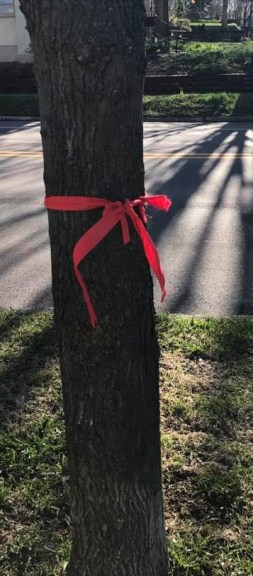
  • Tie a Red Ribbon around trees in your yard as a message to S.T.O.P. and that we need a better way
  • A better way includes immediate stump removal and tree replacement for those trees that need to be removed
  • Post on Facebook and Social Media your concerns and ask your friends and neighbors to follow your lead.

This is where you, as a St. Paul Citizen, can make a difference NOW but only if you stand up and say S.T.O.P.

Don’t wait until you wake up in the morning and find your trees gone.  Your property values diminished.  And the environmental crisis raging outside your door becomes someone else’s problem in the future.

Heart-N-Soul Community Cafe: Feeding the soul by filling the stomach

17626512_1078741668898819_1761255802349922246_n


My cousin, Leola Daul, has been nominated as one of Cass County YWCA’s  2017 Women of the Year.

While I don’t live in Cass County I do know my cousin and, from my perspective, being nominated and being the Woman of the Year amount to pretty much the same thing when it comes to Leola.

Or, as I have known her as my entire life:  Lola.

My cousin Lola is named after my Mom’s mother – Leola.

Or, as she was called, Grandma Lola.

It’s been far too many years since Grandma Lola left us.

While my memories of her sometimes need prodding by pictures of her time with us, or the stories shared by my Mom, there’s no doubt that her spirit has remained strong in her granddaughter, Lola.

I had the opportunity to have dinner with Lola this week while in Fargo.  We spent some time catching up as cousins who have not seen one another will do.  We asked about one another’s siblings.  She about my mom.  Me about her dad.

And, then, we spent a fair amount of time talking about Lola’s efforts to create a new paradigm of community engagement through a concept called community cafes.

More specifically, something she has come to call the “Heart-N-Soul Café.”

If one goes to the website of the “Heart-N-Soul Café” at https://www.facebook.com/HeartnSoulCommunityCafe/ they will find the purpose and mission of the café described this way:

“A cafe dedicated to serving local, healthy, delicious meals to everyone in our community with dignity and respect with pay what you can afford pricing.”

Delving further onto the page one learns that “Heart-N-Soul Café” seeks to

–          Help eliminate local hunger and food insecurity by creating a bridge between individuals, service groups, schools, the faith community and community agencies

–          Eliminate food waste

–          Build a healthy community through nutrition and wellness education

–          Build a healthy community by providing for the basic need of food in a respectful and dignified manner to anyone who walks through the door.

It is an irony, to be sure, that deep in the rich soil of the Red River Valley that there is any sense that the people of this region would be hungry.

Yet, in a factoid presented on ”Heart-N-Soul Café’s” Facebook page it is estimated that there are over 630,000 people who experience food insecurity in North Dakota and Minnesota.

Of those nearly 21,000 live in Cass and Clay counties.

The combined population of the two counties is a little over 233,000 residents.  Which means that nearly 10% of the population experience food insecurity.

The definition of “food insecurity?”

“The state of being without reliable access to a sufficient quantity of affordable, nutritious food.”

Lola has a vision.  One in which community “pop-up” cafes will dot North Dakota and Minnesota and elsewhere providing people access to affordable, nutritious food.

It’s a big vision.  One that won’t come easily or without an investment of resources by those who embrace her vision of giving to the community by being of the community.

Five years ago, I became the Executive Director of Spare Key.  I did not begin this organization.  That hard work was done by our founders, Robb and Patsy Keech, twenty years ago in the kitchen of their home.

For fifteen years prior to my arrival Spare Key had been built, managed, nudged along, kept alive and above the waterline by others before me.

The organization had a pulse.  It didn’t require someone to put it all together.

Lola is embarking on something from nothing.

Yes, it is true there are other community cafes in America.

But to begin one in her community Lola is building it and her vision from the ground up.

I often refer to Minnesota as a place where we have as many non-profits as there are lakes.  As someone who works every day with a passionate board of directors and a small, but committed, staff, I admit there are days when it feels pretty challenging in that environment.

I was not, however, the pioneer that blazed the trail to take a non-profit from its beginning to its current form.

Lola is doing that.

Next month Lola will gather together with other nominees for the Cass County YWCA 2017 Women of the Year dinner.  She will be joined by other amazing women who give back every single day to the community in which they live, work and make a difference for others.

I know that somewhere in that room will be the spirit of Grandma Lola.

But also of Lola’s Mom, Marlene.  A woman who, along with my Uncle Bill, instilled in their children the belief that we are all God’s children and we are all on this Earth to love, care and help one another.

And, as Lola is trying to do:  To feed one another. 


Creating wealth for St. Paul’s minority community: The Public Safety Annex Opportunity for the American Dream

20150603__150606ttd-urbanflower3


Downtown St. Paul’s soon to be vacated Downtown Public Safety Annex is currently a hot topic of discussion.

The 1925 era building which has served for years as public safety training facility will be vacant as the St. Paul Police Department moves to new and more modern facilities at the end of the year.

Mayor Chris Coleman, citing expanded housing and entertainment options in downtown St. Paul, has wisely called for proposals for building use to not focus on additional housing options.

Furthermore, the City’s Department of Planning and Economic Development has made it clear that any proposals that call for demolishing “…the building or to repurpose it for housing will not be considered.”

If ever there was an opportunity that called out for creativity and innovation the Public Safety Annex is it.

What is clear is that a cookie cutter approach to this building simply will not work.

The growing demise of malls as retail continues to founder in a world of Amazon and a multitude of other online distributors of anything and everything that anyone could want or need should be a deterrent to tempting and easy solutions.

Furthermore, development that aims to cater simply to those currently living and working in downtown would not be wise, either.

While it is true there are more people living downtown and more entertainment and dining options than ever before it is also true that serious questions remain about its long-term sustainability.

The departure of major employers, such as Cray, may well be a trend.  Or it could be an aberration.

That being said, the fact is current major employers in downtown are not rock-solid tenants, either.

Ecolab, Securian and Travellers are all companies that could easily choose to consolidate operations elsewhere.

The fact is Ecolab is already reducing its physical footprint in the downtown core.

In an era of mobility and networking the need to retain bricks and mortar structures in any single City is no longer a fait accompli for major American cities.

As major employers depart a downtown they leave a gaping hole.  And, that hole isn’t just an empty building.

They take with them confidence of others who may be willing to make an investment in the City.  They take with them employees who dined at restaurants, shopped at stores and attended baseball and hockey games.

There is a ripple effect that must be taken into account that can have profound ramifications for the City of St. Paul.

Knowing this, there is a unique opportunity for the City of St. Paul to do more than just fill and old building with a bunch of shops or businesses in the hopes of adding more jobs to its downtown count.

As St. Paul’s community becomes even more diverse City leaders and development officials should consider an investment in a project that will do more than create jobs in the short-term.

They should consider a project that will create long-term opportunity and wealth and capital accumulation for minority men and women who are seeking to build their future in this community.

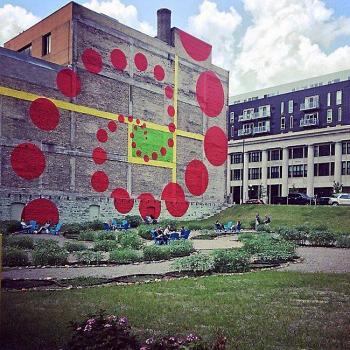
Minneapolis Midtown Global Market offers a glimpse of what could be in the Downtown Public Safety Annex.

According to its website “Midtown Global Market is an internationally-themed public market with great food,  unique gifts, GROCERIES AND LIVE MUSIC.”

It is this type of venue that should serve as a template for the City of St. Paul.

But more than just assembling together a variety of businesses and shops to sell food, gifts and provide entertainment, the City should leverage this moment as a way to establish a new formula for economic development that could be a model for other urban centers.

Imagine that instead of subsidizing a building we subsidized opportunity for minority men and women who hope to use the powers of the marketplace to create wealth and capital for their families, while providing those who will work for and with them to do so for their own families.

The City should consider seeking out private investment capital willing to finance the business ventures of minority business men and women who will locate in the Downtown Public Safety Annex.

That capital will help develop business plans, training for employees and owners, marketing and promotion strategies unique to each business.

More than that, however, that private capital will also serve as a source of credit for those small business owners to give them enough latitude to start their business and endure the difficult nature of a small business start-ups.

Getting a business up and running is tough work.

Keeping it going is even tougher.

It takes time and small businesses operating in the Downtown Public Safety Annex should be given a long enough runway to give them every legitimate opportunity of success.

The City’s contribution, besides handing over a building and space for free, should be to work with existing downtown businesses, big and small, to create mentoring opportunities but also, when and where appropriate, services and resources that can help minority business owners and entrepreneurs their best chance of success.

Other overhead costs for businesses – legal fees, utilities, uniforms and countless other things should be examined for where and when they can be provided pro bono by others, or at dramatically reduced rates.

The ultimate goal should not just be to fill the Downtown Public Safety Annex with jobs.  It should be to fill it with long-term economic opportunity for the diverse community that will soon be the majority population in St. Paul.

It should be a center where wealth can be created.  Where capital can be accumulated.  And where those who are so often an afterthought in the world of economic development are put at the center of it.

It shouldn’t just be about jobs.  Or just about helping a minority man or woman succeed in building a business.

It should be about making their success the platform for the next generation of entrepreneurs for our community.

A place where minority business men and women don’t have to just work hard to get ahead.  But where working hard offers them a legitimate shot at capital accumulation and wealth that might otherwise be far beyond their grasp.

Those men and women should have the opportunity – not the guarantee – to succeed in a way that offers them the potential for achieving the American Dream in all its forms.